
Custom LSR Overmolded Medical Sensor Probe Housing Seal


- group name
- Medical Grade Silicone Overmolding
- Min Order
- 1 piece
- brand name
- SiliconePlus | Silicone OverMolding Manufacturing
- Nearest port for product export
- Yantian (shenzhen,guangdong, china), Shekou (shenzhen,guangdong, china)
- Delivery clauses under the trade mode
- FOB
- Acceptable payment methods
- T/T, L/C, MoneyGram, PayPal, Westem Union, Cash, Escrow
- update time
- Wed, 23 Sep 2026 15:51:22 GMT
Paramtents
Brand SiliconePlus
Product Type Medical Sensor Probe Housing Seal
Silicone Material Medical Grade Liquid Silicone Rubber Option
Substrate Heat-Resistant Plastic Probe Housing
Molding Process LSR Overmolding / Insert Molding
Main Function Sealing / Insulation / Cushioning / Protection
Exposed Functional Area Sensor Tip / Contact Area / Detection Window
Silicone Hardness Customized According to Application
Application Medical Sensor / Diagnostic Probe / Monitoring Device
Custom Input 2D Drawing / 3D File / Physical Sample
Service DFM / Tooling / Sampling / OEM Mass Production
Packging & Delivery
-
Min Order1 piece
Briefing
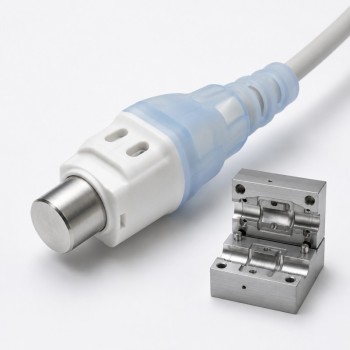
Custom LSR overmolded seals for medical sensor probe housings, protecting interfaces while keeping sensing areas exposed.
Detailed
Product Overview
Our custom LSR overmolded sensor probe housing seal is designed for medical diagnostic probes, monitoring devices, temperature or pressure sensors, and other electronic components requiring sealing, insulation, cushioning, and interface protection.
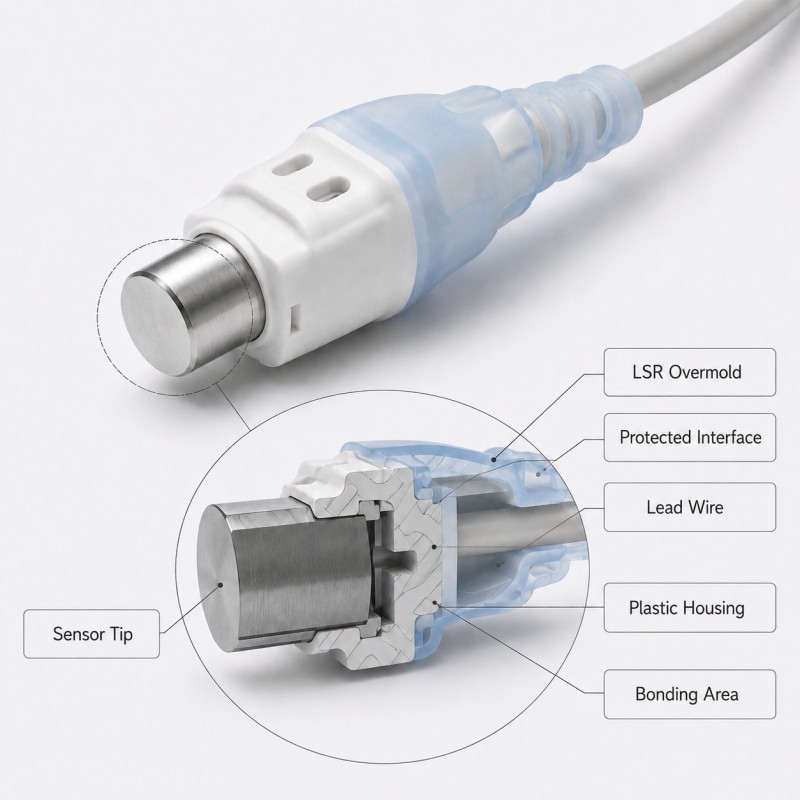
Liquid silicone rubber is molded directly onto selected areas of a heat-resistant plastic probe housing. The silicone can protect the housing transition, cable interface, assembly edge or internal electronic boundary while keeping the sensing tip, detection window, metal contact or other functional area exposed.
This product is not a complete medical sensor or finished diagnostic device. SiliconePlus manufactures the customized silicone overmolded sealing and protective structure according to the customer’s drawings, samples, material requirements and validation standards.
Project support includes DFM review, custom tooling, sample production and OEM mass production through precision liquid silicone injection molding.
What Is an LSR Overmolded Medical Sensor Probe Seal?
An LSR overmolded medical sensor probe seal is an integrated silicone and plastic component used to protect the interface around a probe housing or sensor assembly.
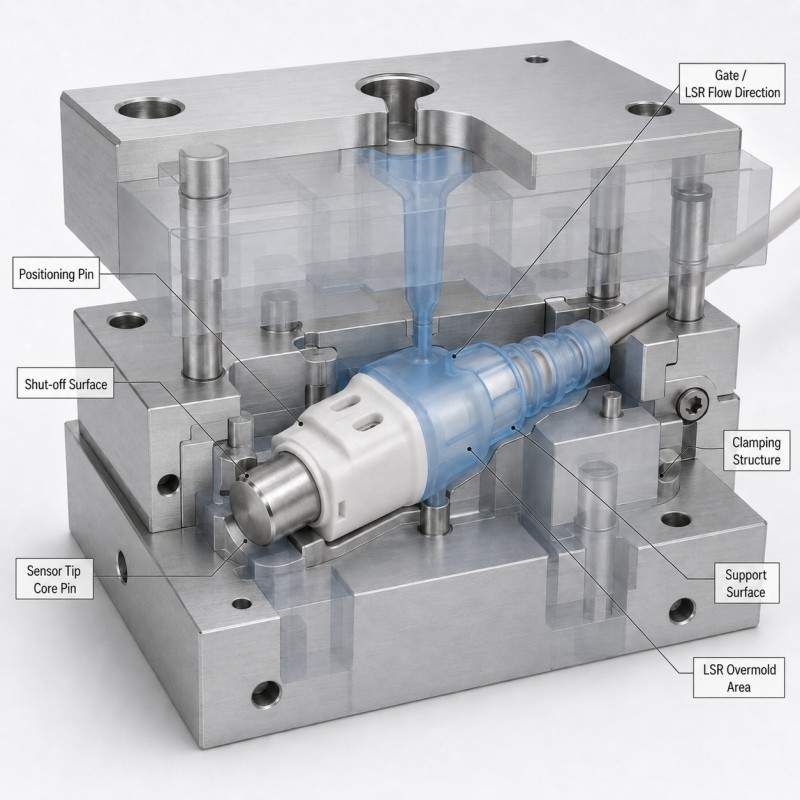
During production, the plastic probe housing is positioned inside a precision mold. Liquid silicone rubber is injected around the selected area and cured into a flexible sealing, insulating or cushioning structure.
This silicone over plastic process can reduce separate gasket assembly and keep the silicone protection area in a defined position.
The overmolded silicone may be designed to provide:
• Housing-interface sealing
• Cable-entry protection
• Electrical insulation support
• Soft transition around a rigid probe
• Vibration and impact cushioning
• Protection against dust and moisture
• Stable silicone positioning
• Reduced loose-gasket assembly
• Customized soft-touch areas
• Controlled coverage around functional zones
The complete sensor function, device performance and regulatory validation remain dependent on the customer’s finished medical device.
Why Use Integrated Silicone Overmolding?
Medical sensor probes may include small plastic housings, metal sensing ends, electrical contacts, cable exits and narrow functional openings.
A separate silicone sleeve or gasket may shift during assembly, while manually applied adhesive may create inconsistent thickness or contamination risk.
An integrated overmolded structure can help provide:
• Defined silicone coverage
• Repeatable positioning
• Fewer separate components
• Reduced manual assembly
• Stable protection around housing transitions
• Customized sealing around complex geometry
• Controlled interface thickness
• Soft cushioning around rigid components
• Cleaner and more consistent appearance
• Better suitability for repeated production
The final material, structure and inspection method must be defined according to the device application and customer requirements.
Key Design Requirements Before Tooling
Functional Sensor Area Protection
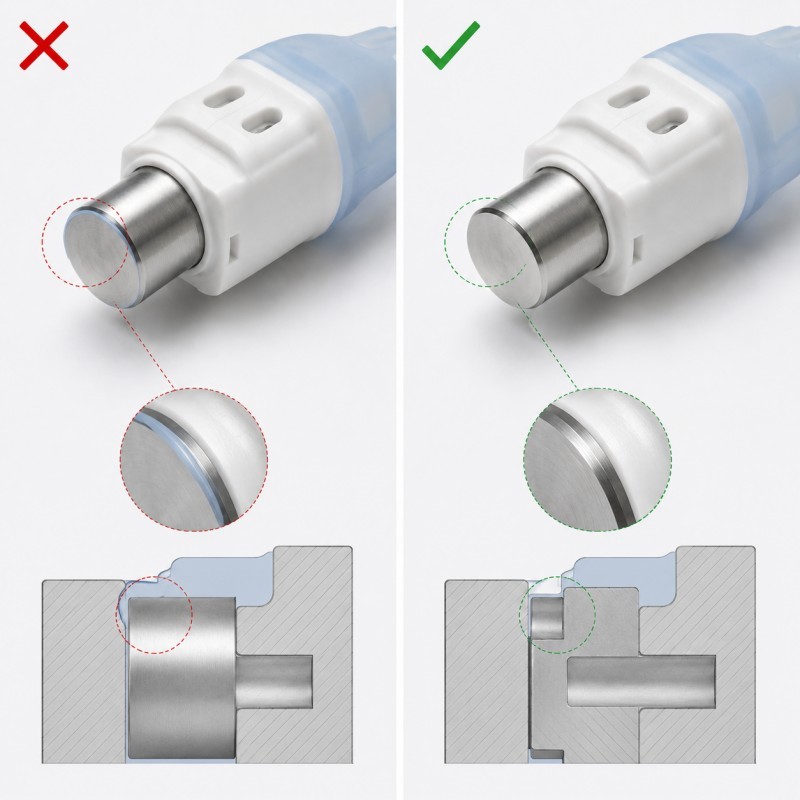
The sensor tip, detection window, electrical contact, metal sensing surface or fluid opening may need to remain completely exposed.
These areas must be clearly identified on the 2D and 3D drawings before mold development.
Typical protected areas include:
• Sensor tips
• Optical windows
• Metal contacts
• Electrical terminals
• Detection surfaces
• Calibration surfaces
• Fluid channels
• Connector openings
• Screw holes
• Assembly datums
• Cable passages
• Areas where silicone flash is prohibited
Because liquid silicone rubber can enter very small gaps, the mold must create an accurate shut-off boundary around each exposed area.
For projects containing exposed windows, contacts or openings, review why LSR overmolding blocks holes, contact pads and connector openings.
Insert Positioning
The probe housing must remain accurately positioned during mold closing, silicone injection, curing and demolding.
If the insert moves or tilts, the silicone coverage boundary may shift.
Possible results include:
• Sensor area partially covered
• Uneven silicone thickness
• Exposed plastic in the sealing zone
• Misaligned sealing edges
• Silicone flash around contacts
• Blocked holes
• Assembly interference
• Unstable appearance
• Dimensional variation
• Functional test failure
Locating pins, support surfaces, cavity nests, shut-off areas and loading fixtures should be reviewed before tooling.
Accurate insert positioning in LSR overmolding helps maintain consistent coverage, bonding, sealing and mass-production repeatability.
Plastic Material Compatibility
The probe housing material must remain dimensionally stable during the LSR molding process.
The engineering review should confirm:
• Plastic material and grade
• Heat resistance
• Wall thickness
• Moisture absorption
• Dimensional tolerance
• Residual molding stress
• Surface condition
• Release-agent contamination risk
• Bonding requirement
• Cleaning requirement
Possible engineering plastics may include PC, PBT, PA, PPS or other materials selected according to the final device design.
The material combination should be evaluated through actual samples and project requirements rather than assumed from the general material name.
Silicone Coverage and Wall Thickness
The silicone layer must be thick enough to provide the required function but should not interfere with sensing, assembly or device dimensions.
Important design points include:
• Minimum silicone thickness
• Transition radius
• Edge thickness
• Coverage length
• Compression area
• Cable-entry geometry
• Sensor-tip clearance
• Parting-line position
• Demolding direction
• Tear risk
• Assembly tolerance
Very thin silicone areas may tear or deform during demolding. Excessively thick areas may increase curing time, assembly interference or material use.
Bonding and Mechanical Retention
Some probe housings require silicone-to-plastic bonding. Other structures may rely on mechanical retention or a combination of both.
Mechanical-retention features may include:
• Retention grooves
• Small through-holes
• Undercuts
• Wraparound edges
• Locking ribs
• Enlarged bonding boundaries
• Embedded housing features
• Controlled silicone overlap
The selected structure depends on the plastic material, silicone grade, operating environment and required retention performance.
Surface treatment, primer or self-bonding LSR should only be selected after material compatibility has been reviewed.
Mold Shut-Off and Flash Control
The mold shut-off determines where the silicone flow stops.
This is especially important around sensing ends, contacts, windows, holes and assembly interfaces.
An unstable shut-off may cause:
• Silicone film over the sensor area
• Flash around a metal contact
• Reduced hole diameter
• Blocked fluid passage
• Contamination of a detection window
• Assembly interference
• Additional manual trimming
• Inconsistent product quality
The shut-off structure must be designed together with insert tolerance, support, gate direction, venting and molding pressure.
Manual trimming should not be used as the main solution for critical sensor or contact areas.
Cleaning and Sterilization Requirements
Medical-related projects may use different cleaning or sterilization methods.
Before material and process confirmation, the customer should identify whether the component may be exposed to:
• Alcohol wiping
• Detergent cleaning
• Disinfectant
• Steam
• Ethylene oxide
• Gamma irradiation
• Heat aging
• Repeated washing
• Other project-specific processes
Compatibility cannot be assumed for every medical application.
The actual silicone grade, plastic material, bonding method and validation plan should match the required cleaning or sterilization condition.
Typical Applications
Custom LSR overmolded medical sensor probe housing seals may be developed for:
• Temperature sensor probes
• Pressure sensor housings
• Diagnostic device probes
• Home health monitoring devices
• Patient monitoring sensors
• Medical electronic detection modules
• Handheld diagnostic instruments
• Wearable health sensors
• Cable-connected medical probes
• Medical equipment interface sensors
• Laboratory detection equipment
• Customized medical electronic assemblies
For related manufacturing capabilities, review our medical grade silicone overmolding solutions.
Additional design considerations are explained in our guide to silicone overmolding for wearables and medical devices.
Customization Options
Each project can be customized according to the customer’s drawings and device requirements.
Available options include:
• Silicone material grade
• Silicone hardness
• Silicone color
• Plastic substrate material
• Silicone coverage area
• Sensor-tip exposure area
• Sealing-lip geometry
• Cable-entry structure
• Soft transition area
• Bonding boundary
• Mechanical-locking structure
• Surface texture
• Parting-line position
• Gate position
• Mold shut-off structure
• Dimensional tolerance
• Cleanliness requirement
• Inspection method
• Prototype tooling
• Production tooling
• Packaging method
All functional, regulatory and testing requirements should be confirmed before mold development.
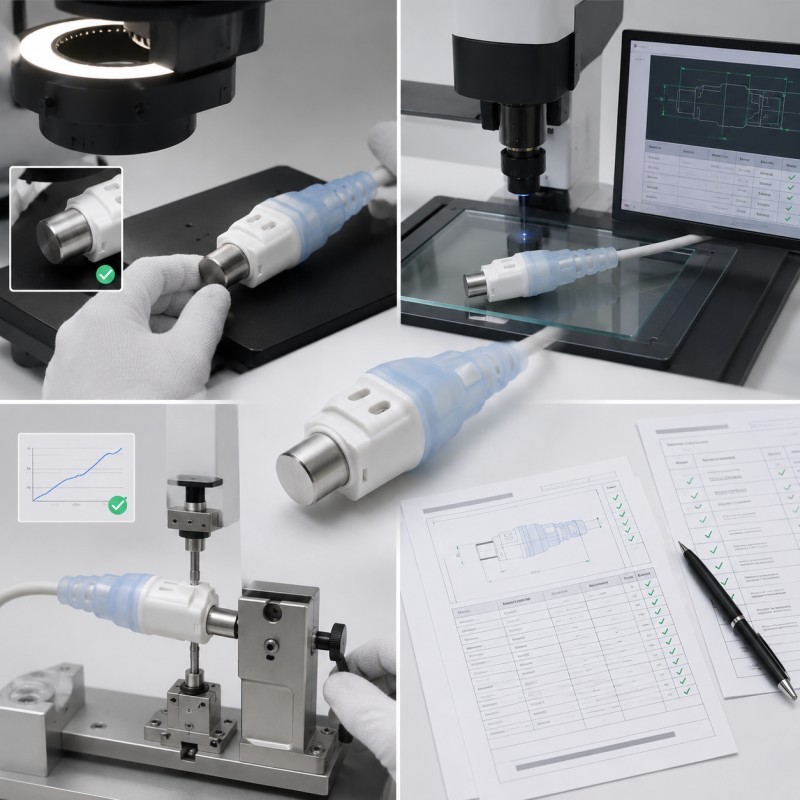
Quality Inspection and Validation
A medical probe overmolded component may look acceptable but still fail assembly or functional testing.
Inspection and validation may include:
• Incoming insert inspection
• Insert-position inspection
• Sensor-tip exposure inspection
• Silicone coverage inspection
• Dimensional measurement
• Wall-thickness inspection
• Flash inspection
• Surface-defect inspection
• Bonding evaluation
• Pull or peel testing
• Assembly verification
• Cable pull testing
• Leak or sealing testing
• Electrical function verification
• Sensor response verification by the customer
• Cleaning compatibility testing
• Aging testing
• Production-lot inspection
The final test plan should be agreed according to the customer’s device and approval requirements.
SiliconePlus manufactures the silicone overmolded component. Final medical-device validation, performance approval and regulatory responsibility remain part of the customer’s finished-device program.
DFM, Tooling and Production Support
SiliconePlus supports medical sensor probe overmolding projects from early evaluation to production.
Project support may include:
• 2D and 3D drawing review
• Physical sample review
• Plastic material evaluation
• Silicone material selection
• Functional-area definition
• Insert-positioning review
• Mold-support analysis
• Shut-off design review
• Silicone coverage review
• Bonding-area evaluation
• Mechanical-locking review
• Gate and venting analysis
• Custom mold development
• Prototype sampling
• Dimensional inspection
• Bonding evaluation
• Process optimization
• OEM and ODM mass production
Early DFM review can help identify blocked sensor areas, insert movement, weak retention, plastic deformation, flash and assembly interference before tooling is completed.
Information Required for Quotation
Please provide as much of the following information as possible:
• 2D drawing
• 3D file
• Plastic probe housing sample
• Complete assembly drawing
• Plastic material and grade
• Sensor or contact area that must remain exposed
• Silicone coverage area
• Required silicone hardness
• Bonding requirement
• Cleaning or sterilization method
• Dimensional tolerance
• Inspection standard
• Estimated annual quantity
• Prototype quantity
• Required production schedule
A physical sample or complete assembly drawing is recommended when the sensing area and silicone boundary cannot be clearly understood from product photos.
Frequently Asked Questions
Do you supply the complete medical sensor?
No. Our core service is custom silicone molding and silicone overmolding. We manufacture the silicone sealing, insulating, cushioning or protective section according to the customer’s supplied probe housing or insert.
Can the sensor tip remain exposed?
Yes. The mold can use precision core inserts and shut-off structures to protect the sensor tip, metal contact, detection window or other functional area. These areas must be clearly identified before tooling.
Can medical-grade silicone be used?
Medical-grade silicone options can be evaluated according to the application, contact requirement, customer specification and required material documentation.
Can silicone be molded directly onto plastic probe housings?
Yes, provided that the plastic material, temperature resistance, surface condition, insert tolerance and mold design are suitable for LSR overmolding.
Can you support prototype samples?
Yes. DFM review, tooling, sample production, inspection and process optimization can be completed before mass-production approval.
What is the minimum order quantity?
The general mass-production MOQ starts from 500 pieces, depending on the insert structure, silicone material, mold design, inspection and documentation requirements. Prototype quantities can be evaluated separately.
Send Your Medical Probe Project
Developing a diagnostic probe, medical sensor housing, monitoring device or other medical electronic component?
Please contact SiliconePlus for a project review and send your drawings, plastic housing sample, sensing-area requirements, material specifications, testing standards and estimated quantity.